Symbolographia, sive DE ARTE SYMBOLICA SERMONES SEPTEM, 1701-1702,
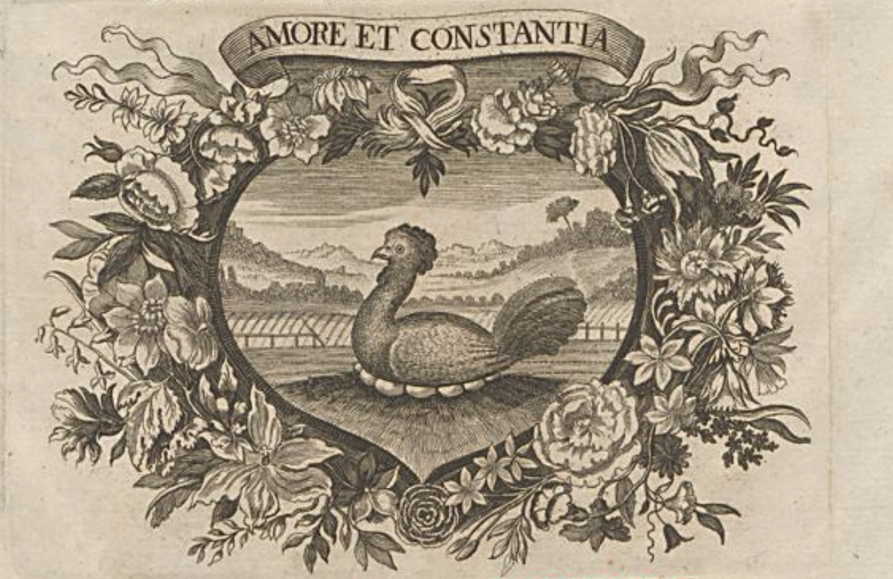
Jacob Bosch’s book, aka Boschius, offers a vision of the world influenced by new scientific and technological discoveries, as well as by the search for simplicity, typical of the Age of Enlightenment. Thus we will see how the esoteric concepts underlying the legends of the ancient Greco-Roman deities will be interpreted through a vast collection of everyday objects, machinery, ordinary gardens, landscapes, and boring furniture. Of course, all adorned with the sun and stars that we can see in the sky.
The common pieces of everyday reality represented in Ars Symbolica do not possess the evocative properties of the elaborate fantasies in the drawings of Alciati, Ripa, or Cartari, where the elegant and imaginative graphic part, in itself, was planned to be much more explanatory than the caption. The true core of wisdom in Jacob Bosch’s work lies in the essentiality, conciseness, and precision of the written text, whether it consists of simple titles, mottos, or aphorisms.
These succint rules do not benevolently accompany the reader to understanding, but require refined erudition in order to be inserted into a complete message. Proof of this is the fact that some images were deliberately omitted by the author, who instead provided a numbered motto in the list of aphorisms. Would the design have been too complex, or was Boschius aware that readers, in general, tend to follow images in a mesmeric way?
Despite the formal indexes and groupings, Boschius’s intention was certainly not to make Ars Symbolica an effective artistic tool for memory. Indeed, shuffling our mnemonic capabilities like a fallen deck of cards made those aphorisms even more isolated. It’s no surprise, then, that Ars Symbolica is actually a collection of mottos that Boschius’s contemporary scholars and erudite personalities had engraved on medals and coats of arms.
Latrunculi, commonly known as chess pieces:
Stones and Ponds:
Compasses, Circular Lines, Spheres and Cylinders:
Other Geometric Figures:
- Triangles
- Cubes and Parallelepipeds
Pressure and Impact Tools and Equipment:
Literary Character Dossiers:
Images:
- Tables, Canvases and Charts
- Statues
X
Construction Tools:
Lifting, Balancing and Supporting Equipment:
Mountains
- X
- X
Subterranea: Gems, Stones and Minerals
Globe of the Earthly World:
- One World is not Enough
- A World Pierced and Divided
X
- X
Orientation:
- Nautical Compasses
- Compasse Roses and Wind Roses
- Maps and Plans
Time Tools
- Clocks
- Sundials
- Hourglasses
Stars and Costellations, North:
Stars and Costellations, South:
- Canis Maior
- Sirius
Flames:
- X
X:
- X
Closing and Opening
- Keys, Padlocks and Latches
- Doors and Gates
- Chests and Safes
- Chains
- Coffins and Tombs
Casing
- Boxes and Caskets
- Coffins and Tombs
- Baskets
- Jugs
Weapons:
- Cannons
- Rockets
- Swords
- Arrows and Bows
Chemical Tools:
- Glasswares
- Ovens
- Lenses and Burning Mirrors
Landscapes under the Sun:
- Gardens
- Labyrinths and Mazes
- Capitals and Bases
- Columns and Pillars
- Fountains
- Flowers Planted in Pots
Landscapes under the Moon:
- Ponds
- Boundary Stones, Steles, Capitals and Monuments in the Area
Atmospheric Phenomena:
- Thunderstorms
- Hail
- Rainbows
- Terrestrial Fires
- Lights and Fires from the Sky
Greenery:
- Trees
- Flowers
Layout, Plans an Urban design
- Squares and Porticoes
Buildings:
- Pyramids
Interior Decor and Furniture:
- Doors
X:
- x
Marine Vessels:
- X
X:
- x
Cooking and Pastry Making:
- Coals
- Candy or Lozenge
X:
- x